
For this post I’m going to address the most popular topic people ask when I talk with them about my polycystic kidney disease (PKD), which is organ donation and kidney transplants. Please note, anything written here is based on my own experience and learning, and should not be taken as medical advice. Please refer to your doctor, or the links page of this blog for the most accurate and up to date information.
So, what is organ donation and why is it necessary in my situation?
From the Canadian Medical Association, they describe organ donation as the following: Organ donation, also called organ and tissue donation, involves the surgical removal of an organ from one person and placing it in the body of another person who needs it, usually because the recipient’s organ has failed or been damaged. Very often, the transplantation of that organ is the only thing that can save the recipient’s life. What is organ donation and how does it work? | CMA
In a nutshell, PKD is a disease where cysts multiply and grow in size on kidneys, cutting off their function over time until it reaches a state of failure, which is classified as Stage 5 End Stage Renal Failure (for more info on the different stages of PKD, please go to the Mayo Clinic for a good overview). This is where your estimated Globular Filtration Rate (say that 5 times fast!) or eGFR is 15 ml/min/1.73m^2 or less. Stage 1 where damage hasn’t occurred to the kidney yet, is typically 90 ml/min/1.73m^2 or above.
It is often around the time someone nears Stage 5 where life saving options are discussed with the patient. Currently, there are two options. Dialysis, where the use of a machine cleans your blood. And organ transplant, where a PKD patient can receive a kidney from a living or deceased donor. While it is good that the technology behind dialysis exists when an organ transplant can’t occur in time, it is favourable towards the patient to receive a transplant before dialysis becomes necessary. The patient is usually healthier at the time of surgery and it can help avoid complications that come with increasing kidney failure. Kidney Transplant for PKD: Can You Avoid Dialysis? – PKD Foundation of Canada
In Nova Scotia, the Kidney Transplant Program is part of the Multi-Organ Transplant Program (MOTP) for Atlantic Canada. The Program has been active since 1969 and is located in Halifax, Nova Scotia, at the QEII Health Sciences Centre and serves the provinces of Nova Scotia, New Brunswick, Prince Edward Island, and Newfoundland.
The Kidney Transplant Program of MOTP performs approximately 80-100 kidney transplants yearly. Most are from deceased organ donors but about 25-40 are from living donors. The Program participates in the national Live Donor Paired Exchange Program. Approximately 5-10 of these kidneys will be combined with pancreas transplants for patients with Type 1 Diabetes Mellitus.
All patients with End Stage Kidney Disease are to be considered for a kidney transplant, however not everyone is eligible. The Canadian Transplant Society published eligibility guidelines, and for those who like reading science journal articles, you can enjoy those guidelines here The Canadian Medical Association Journal in 2005. I would have added a TL/DR, but even that was too long and you likely would have skimmed it. Suffice to say, there are standards! And they start with a patient’s nephrologist submitting them for review to the Kidney Transplant Team.
Once a patient is approved by the Kidney Transplant Team, a transplant will either occur when
1.There is a living donor who is a match, more info here Living Kidney Donor Program – MOTP Atlantic Canada or;
2. The patient has started dialysis and then also becomes eligible for the deceased donor list. More info here Kidney Transplant Program – MOTP Atlantic Canada
Currently, I’m at Stage 4 of PKD, where my function sits around 20 ml/min/1.73m^2 so I have a little bit longer to wait before I can be referred for the Kidney Transplant Team. I think it is quite amazing that we were created with two kidneys, but can function healthily with one. Multiple family members of mine have received live donor kidneys from both family members and strangers and have done well post-transplant.
The last thing about organ donation is the requirement for matching blood types! My blood type is B-Positive, but I can receive positive or negative B types as well as the universal donor of O-Negative. Please see the Canadian Blood Services webpage for more information on which blood types are compatible with each other: Which blood types are compatible with each other: Blood type compatibility.
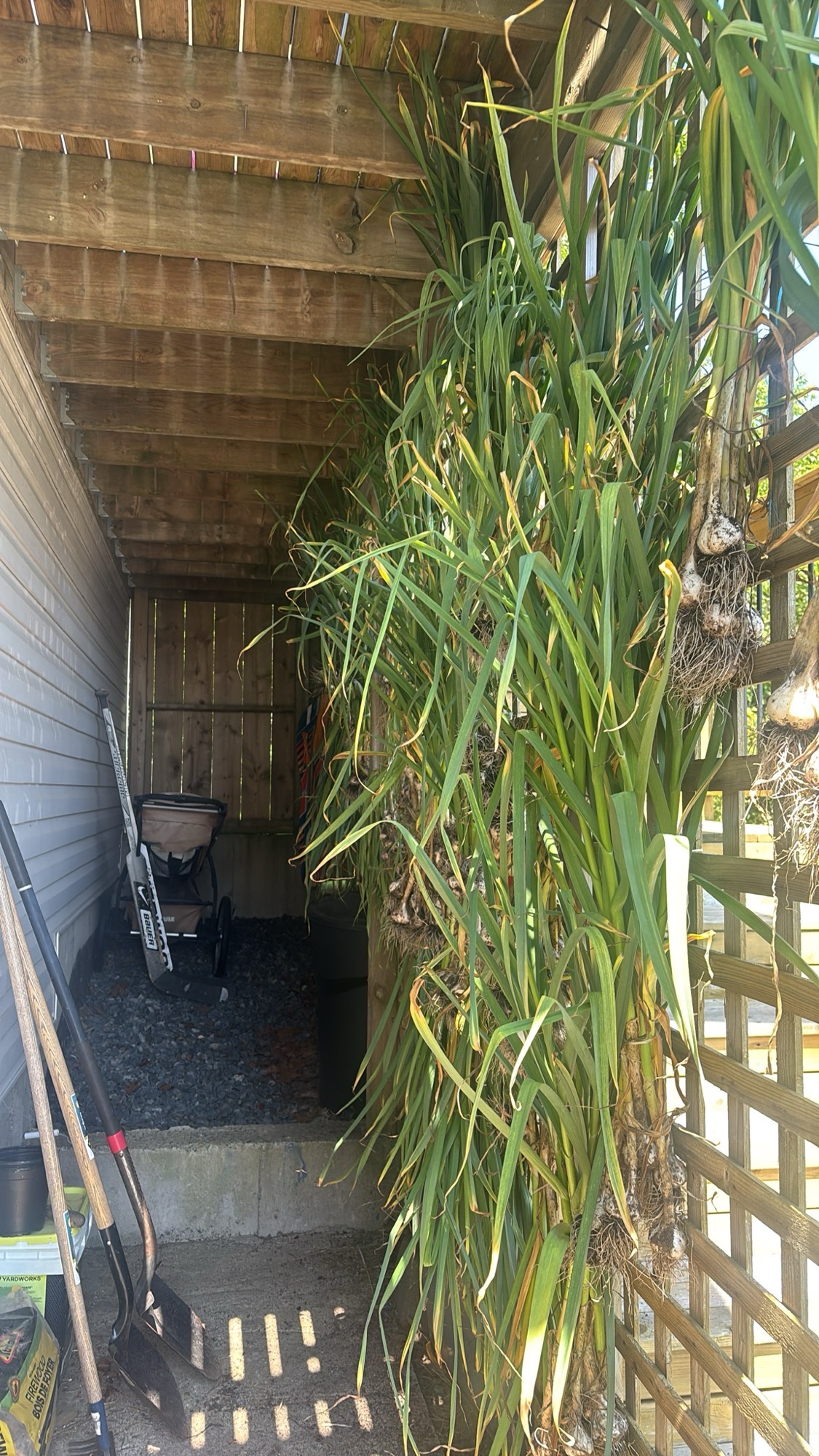
Now! Onto garlic. 😁🧄🧛We harvested about 180 this year, by far our biggest haul yet and I still fear that I will run out over the next year… If you’re a fan of garlic, to those in the know, when a recipe calls for one clove, that means three or four minimum. It is good my wife enjoys garlic as much as I do, because it would make things awkward if we weren’t on the same page regarding garlic consumption. 😘
We have a variety of different kinds, both hard and soft neck, with Music and Sicilian varieties. The soft neck are new this year, I don’t recall their names at the moment, but I will update on this later when we’ve braided them!
Until next time, thank you for stopping by and taking the time to join me here with this. I hope you are enjoying your summer and have a great long weekend!


Leave a Reply